

%20(2).png)
At the heart of DreamWorks Animation’s new film Forgotten Island is the bond between lifelong best friends Jo and Raissa, who find their friendship tested as they are about to take different paths in life.
Directed by Joel Crawford and Januel Mercado, the film finds recent high school graduates Jo and Raissa celebrating their last night together at the beach before going their separate ways. But upon finding a mysterious portal, they are transported to the fantastical island of Nakali, a world filled with magical and mythological creatures inspired by stories passed down by their Filipino families. When they learn that the only way home may be to forget each other, their journey becomes about more than escaping the island. It becomes a fight to preserve the friendship that has defined their lives.
SDFX Studios was excited to continue their partnership with DreamWorks Animation, providing immersive 3D stereo services for the animated feature film. With its blend of epic adventure, imaginative world-building, and a heartfelt story about friendship, Forgotten Island offered countless opportunities forImmersive 3D storytelling.
For SDFX Studios Stereographer Sanford Warwick, Forgotten Island was a film where the possibilities of the format were already deeply embedded in the animation.“This movie, probably more than any other movie I've ever worked on before, isjust made for 3D,” Warwick explains. “There's just so much throughout the whole movie that really plays into the format.”
Rather than simply adding depth to the finished animation, the approach was to amplify what the filmmakers were already creating, using stereo to enhance scale, movement, character design, environments and ultimately, the emotional moments at the center of the story.
The film begins in the real world with a relatively conservative sense of depth. But when Jo and Raissa passthrough the portal, the dimensionality expands with them. Warwick used the portal sequence itself as the transition, increasing the depth as the characters crossed from the familiar world into the mysterious fantastical island of Nakali. From that point on, their world opens up around them.
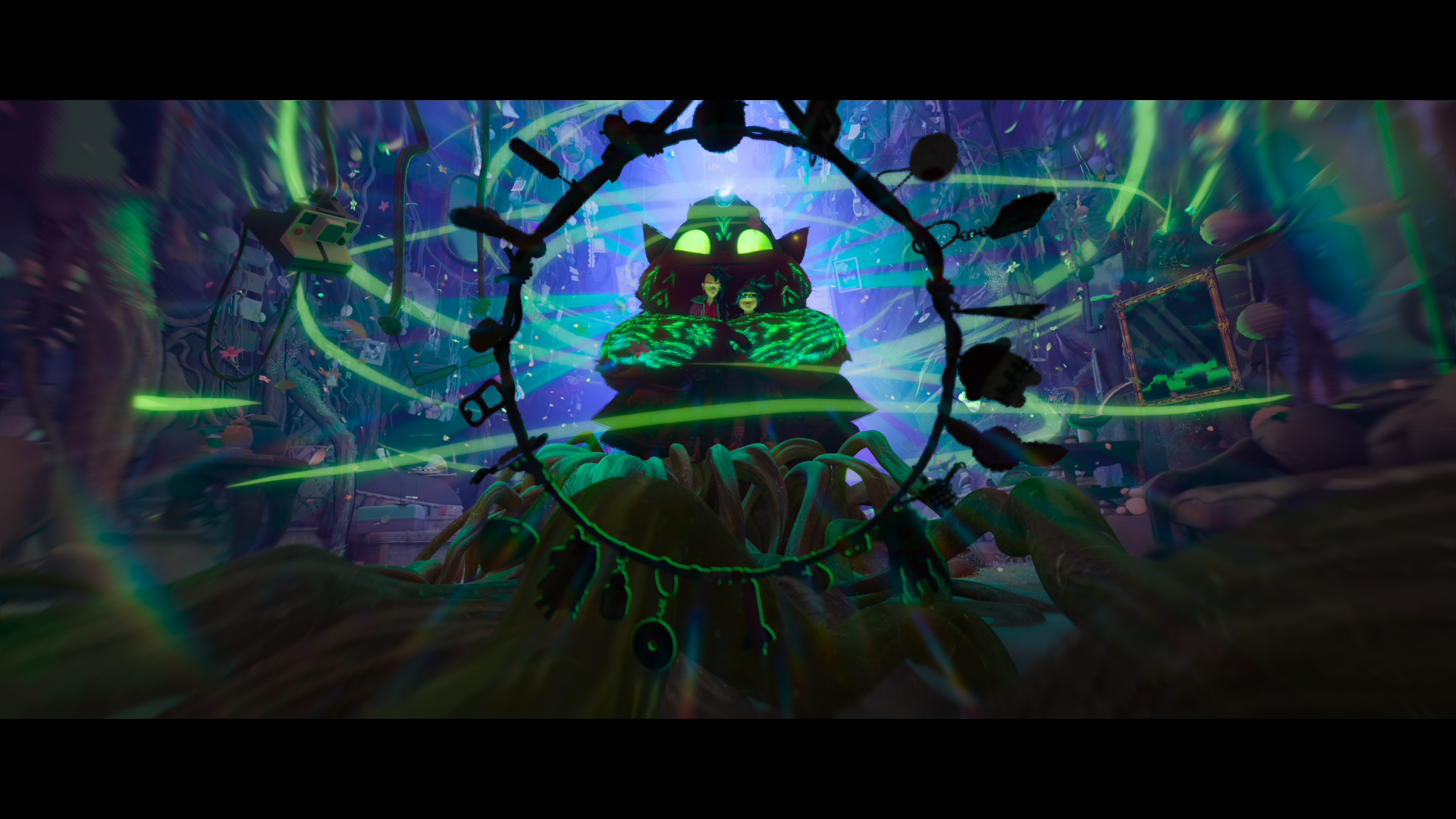
Inspired by Filipino mythology and folklore, Nakali is populated by fantastical creatures and environments characterised by their unique shapes, movement and scale. The world gave the stereo work plenty to explore, but one character became a major focus from the very beginning.
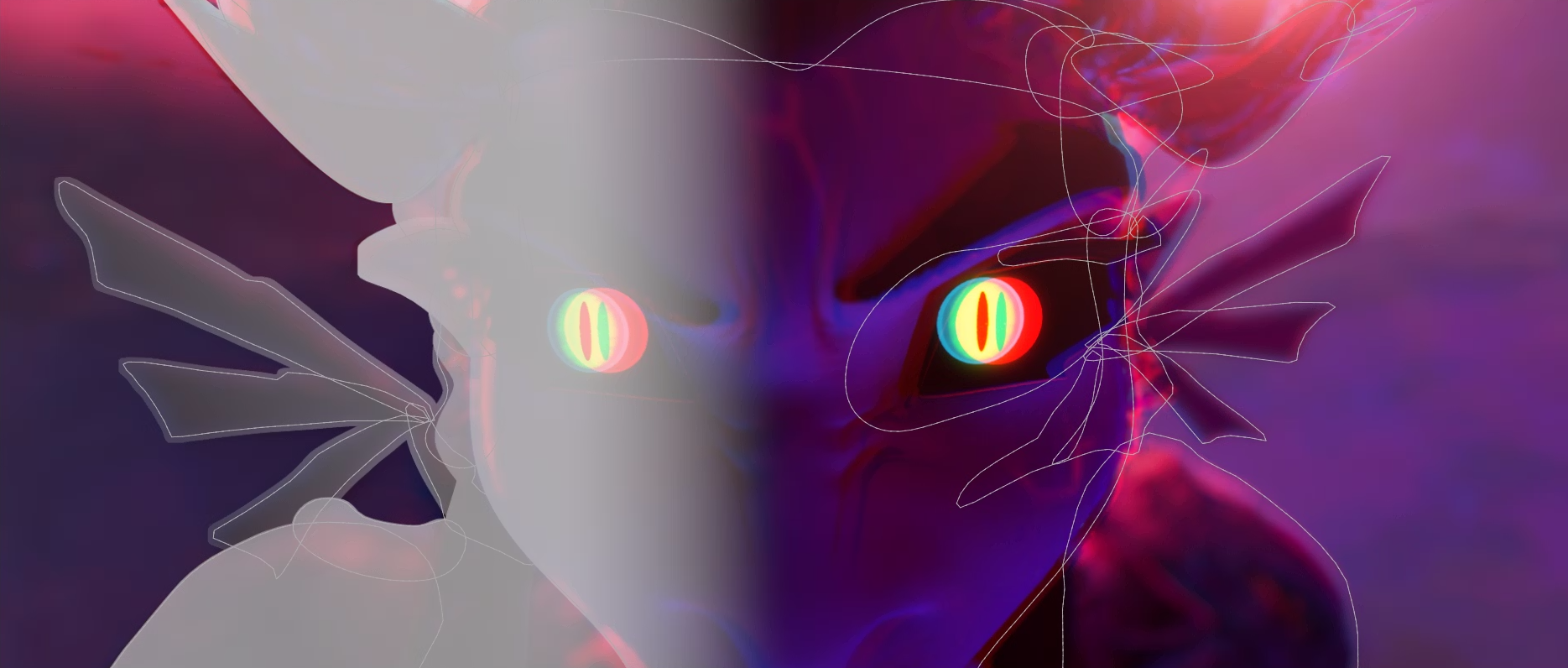
One of the biggest opportunities was the dreaded Manananggal. “She was one of the characters the filmmakers were particularly excited to see in 3D,” Sanford recalls. Large powerful and unpredictable, the creature is an imposing presence, from her piercing yellow eyes, razor sharp teeth, and sudden contorted movements. She cantransform even the most ordinary spaces into something threatening, and at times pushes the film into genuine horror territory. This gave the stereo team an opportunity to make her presence feel even more immediate and unsettling.
That enthusiasm carried into the early look and the development process. Manananggal became a key part of the material developed for the filmmakers, with the team focusing on making her feel huge and scary and giving her the presence to feel as though she could come through the screen. Her extreme design made her a natural fit for the format. In 3D, her size, unusual anatomy and aggressive movements could occupy space in ways that heightened the sense of danger, making every encounter feel more immediate and immersive.
One of the first characters Jo and Raissa encounter in Nakali is Raww, a weredog (Dave Franco) moves between human and canine forms, provided opportunities to exaggerate his transformations, particularly the moments when a sneeze triggers a sudden shift from boy to dog. His snout also presented a specific stereo challenge, requiring careful attention to the shape and volume to ensure it felt natural in depth.
Bungi, meanwhile, is an enormous, round and emotional “big baby,” while other inhabitants of Nakali bring their own distinctive shapes and transformations.“Stereo gives these characters a greater sense of volume and physical presence,”Sanford explains. “They feel tangible rather than simply graphic.” The same principle extends to the environments.
Nakali is filled with spaces that encourage the audience to look further into the frame, from expansive marketplaces and fantastical landscapes to the layered spaces inhabited by its mythological creatures. That said, some of the film's most interesting 3D moments happen when the world itself begins to reveal what lies beneath the surface.
Memory is central to Jo and Raissa's journey, and the film's visual style evolve as their memories are revisited and reimagined. rom anime-inspired sequences, to more abstract moments, the stereo approach adapts alongside the animation, ensuring each memory retains it unique character while remaining fully immersive.
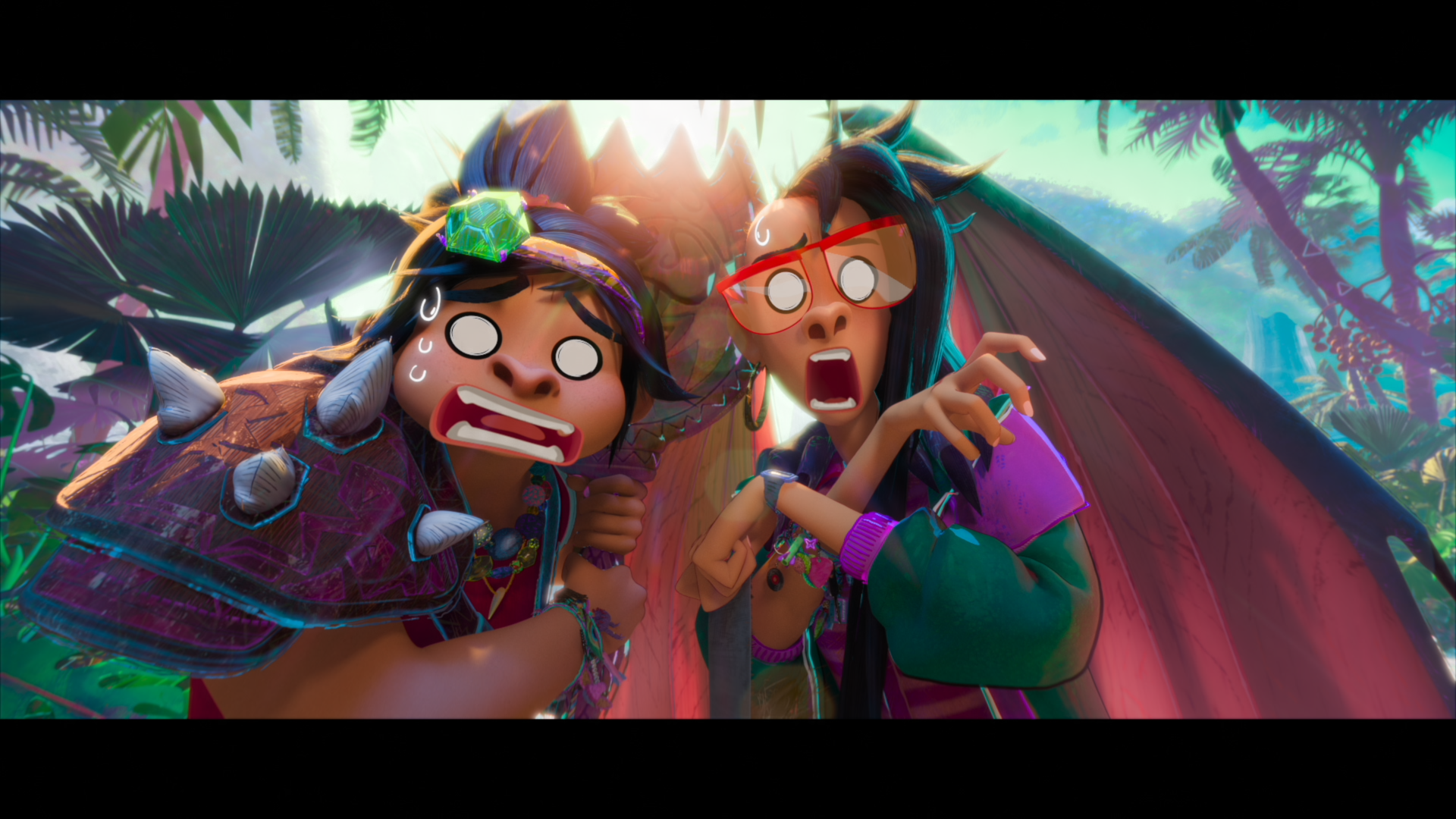
During heightened emotional moments, characters can lose their pupils, their heads can stretch, and backgrounds can become flatter or disappear altogether. In these sequences, the depth is concentrated around the characters, giving their expressive movements and reactions more volume and presence while allowing the background to recede. The result is a dimensional language that can change with the animation without losing the overall sense of immersion.
Bungi's magical paintings take that idea a step further. The paintings are animated within the world of the film, but in 3D, SDFX Studios was able to separate their individual layers and build depth between them. What appears to bea flat drawing from a distance becomes something audiences can peer into, revealing volume and detail that would not exist in the same way in 2D.
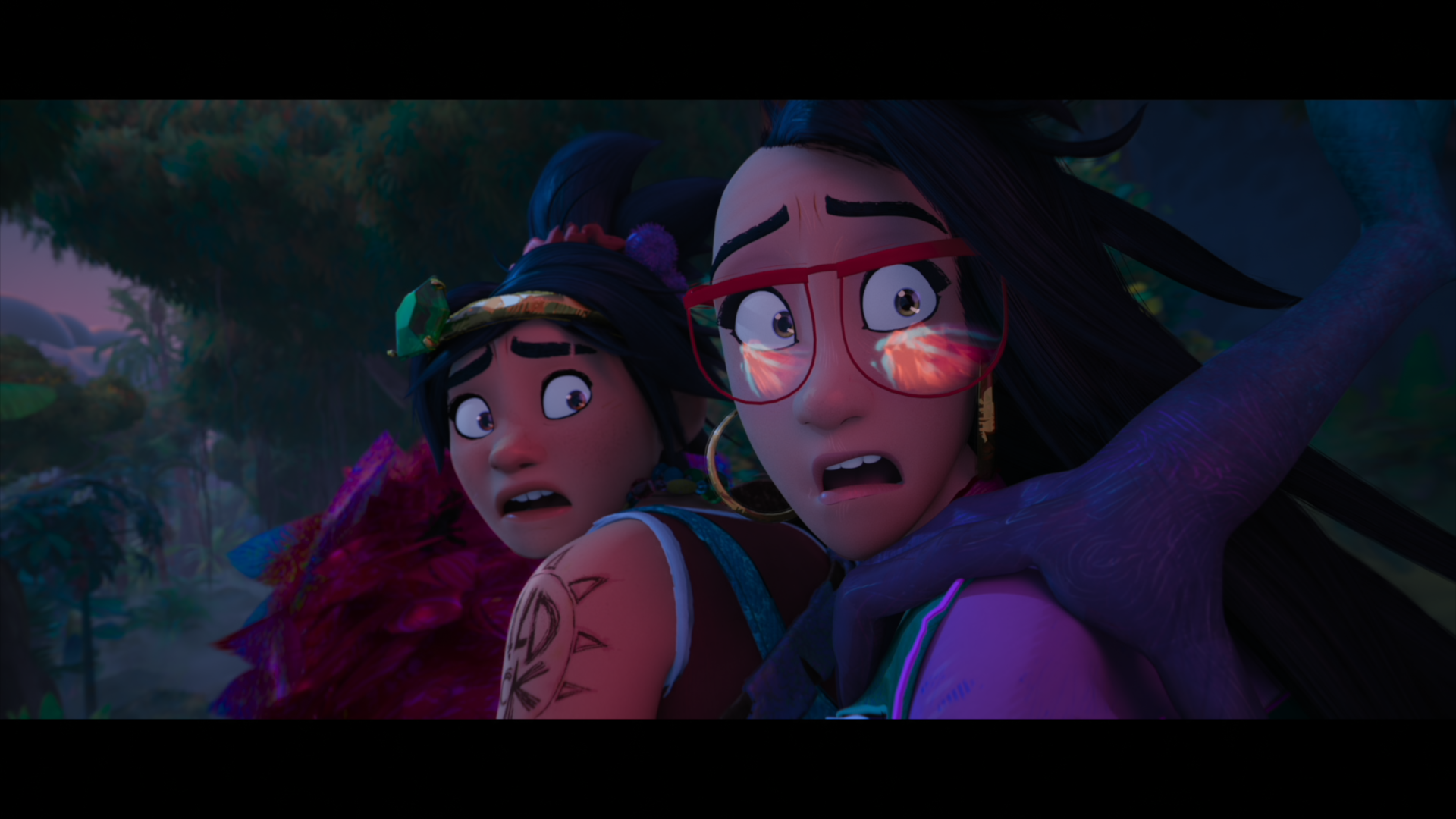
That idea becomes most important when Jo and Raissa's friendship reaches its emotional climax. Near the end of the film, Jo gives a memory to Batiba in exchange for Raissa's return to the real world. If the exchange succeeds, their friendship could be permanently broken, with Raissa unable to return to the island and potentially unable to remember Jo. As Raissa tries to reach the memory, the distance between the two characters becomes almost impossible to cross. She reaches forward but can never quite close the gap.
Here, depth becomes an emotional storytelling tool. The widening gap between the characters mirrors the emotional distance they are fighting to overcome, while the collapsing world around them creates an additional force pulling them apart. That approach ultimately defines the 3D experience of Forgotten Island. Whether exploring Nakali’s sprawling environments, encountering its mythological creatures, or navigating the film's shifting styles, Immersive 3D draws audiences further into the world and the story.
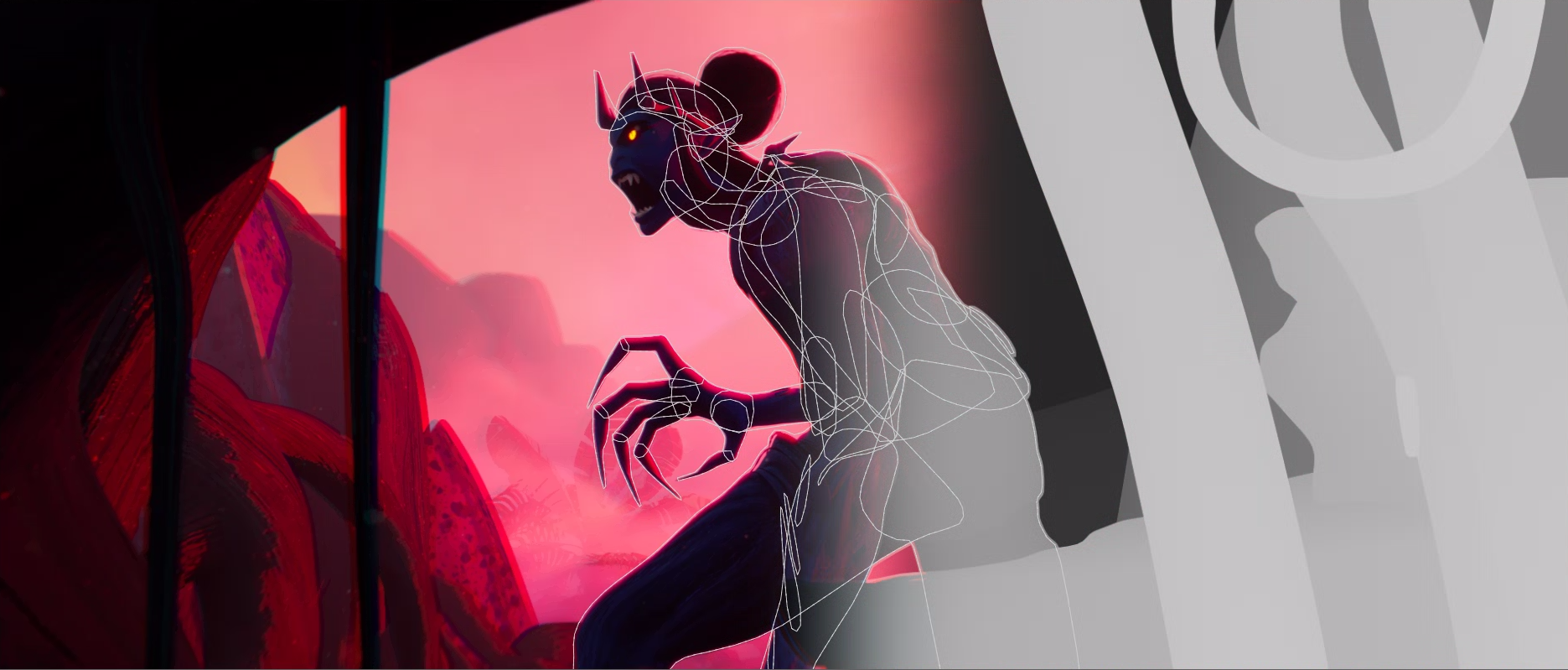
As Warwick put sit, the extreme nature of the animation can already be felt in 2D. In 3D, audiences feel like they are part of it, from the reach Manananggal's stretching arms to the worlds hidden inside the film's memories. Rather than simply making Nakali deeper, the format helps reintroduce the ideas at the heart of the story: friendship, memory, separation and the fear of losing someone you love.
ThroughImmersive 3D, SDFX Studios helped bring that experience to life, deepening both the scale of Nakali and the emotional journey at the center of ForgottenIsland.
For more information about the film, click here.